
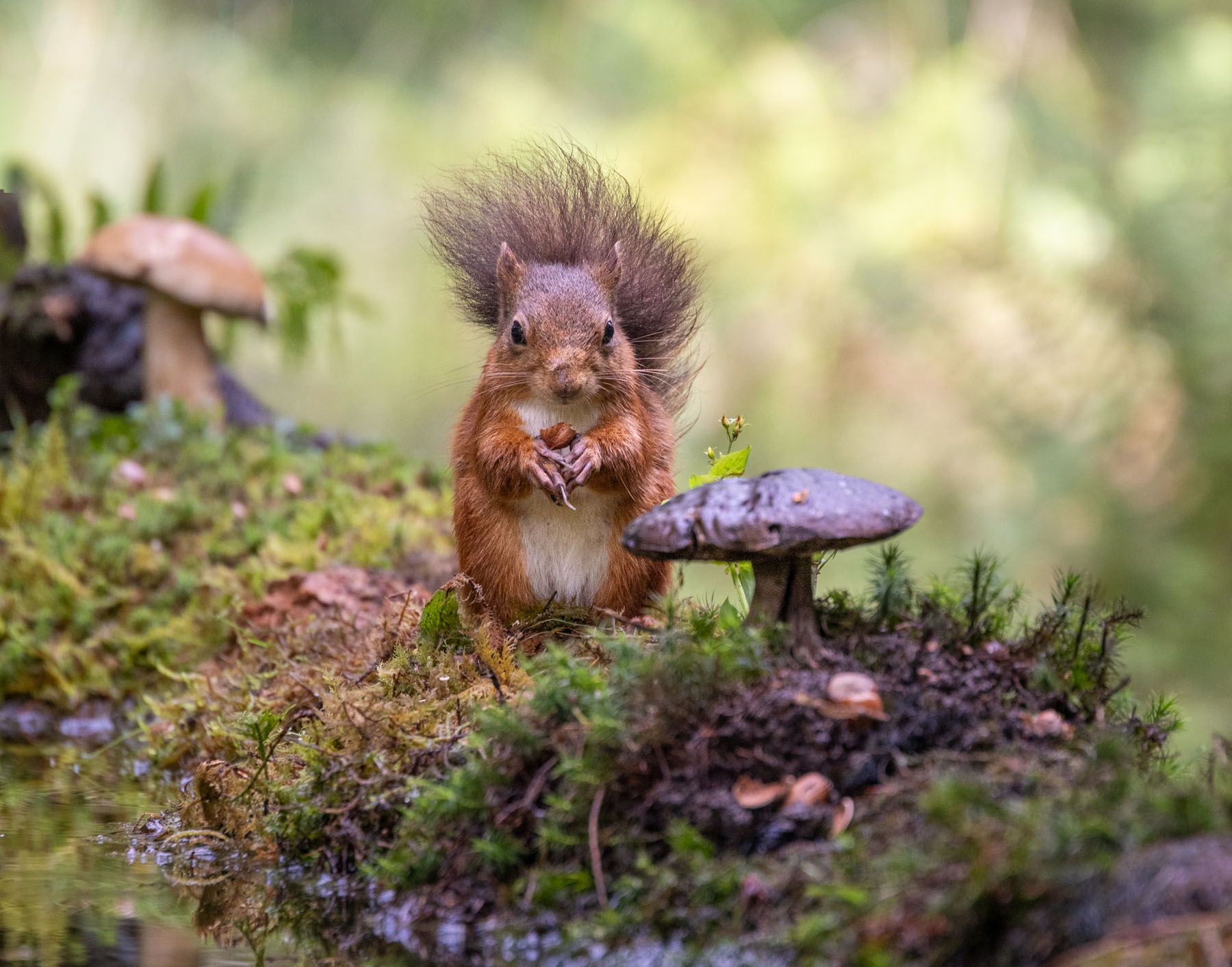
Photographing red squirrels has been on my wish list for several years, so hiring a hide in the Yorkshire Dales was something I had been really looking forward to during our UK holiday. As a wildlife photographer, the opportunity to spend a whole day photographing these beautiful little animals was pretty special.
From the moment my husband and I arrived, the squirrels started appearing. Within minutes, they were darting through the woodland and visiting the feeding areas, and I knew I was in for a very busy day behind the camera.
The hide, owned by Paul Fowlie, offers four different settings for photographing the squirrels: the Jumping Platform, Dry Stone Wall, Woodland Hide and Reflection Pool. Each provided a very different opportunity to photograph the squirrels, and over the course of the day I had the chance to capture everything from mid-air action shots to quieter woodland portraits.
A Special Encounter
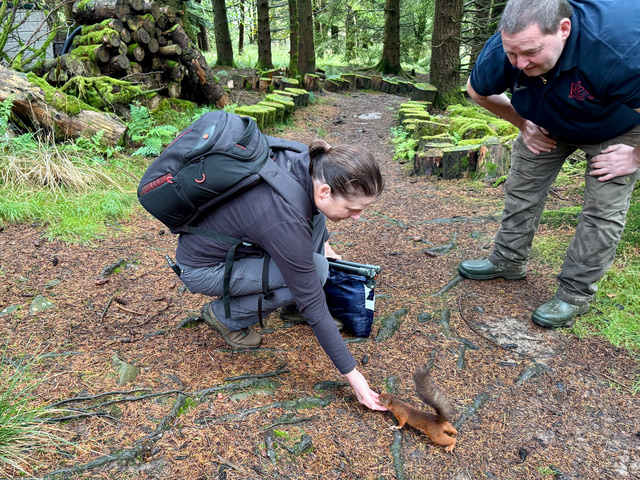
One of the highlights of the day was getting the opportunity to hand-feed one of the young squirrels.
Holding out a hazelnut and having one of the seven-month-old kits come close enough to take it from my hand was a very special experience. It’s one thing to photograph a red squirrel from a hide, but quite another to have one sitting just centimetres away.
The Jumping Platform
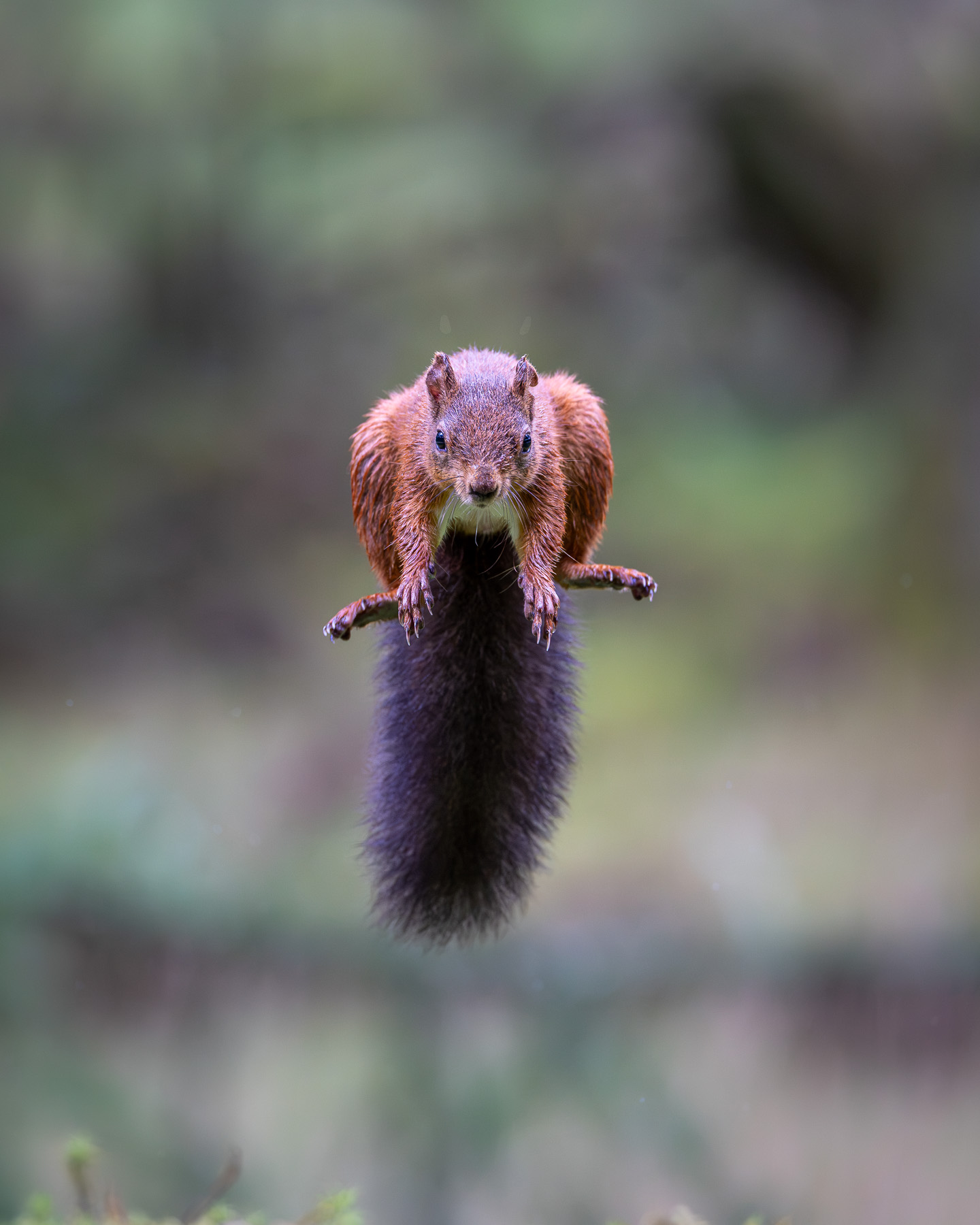
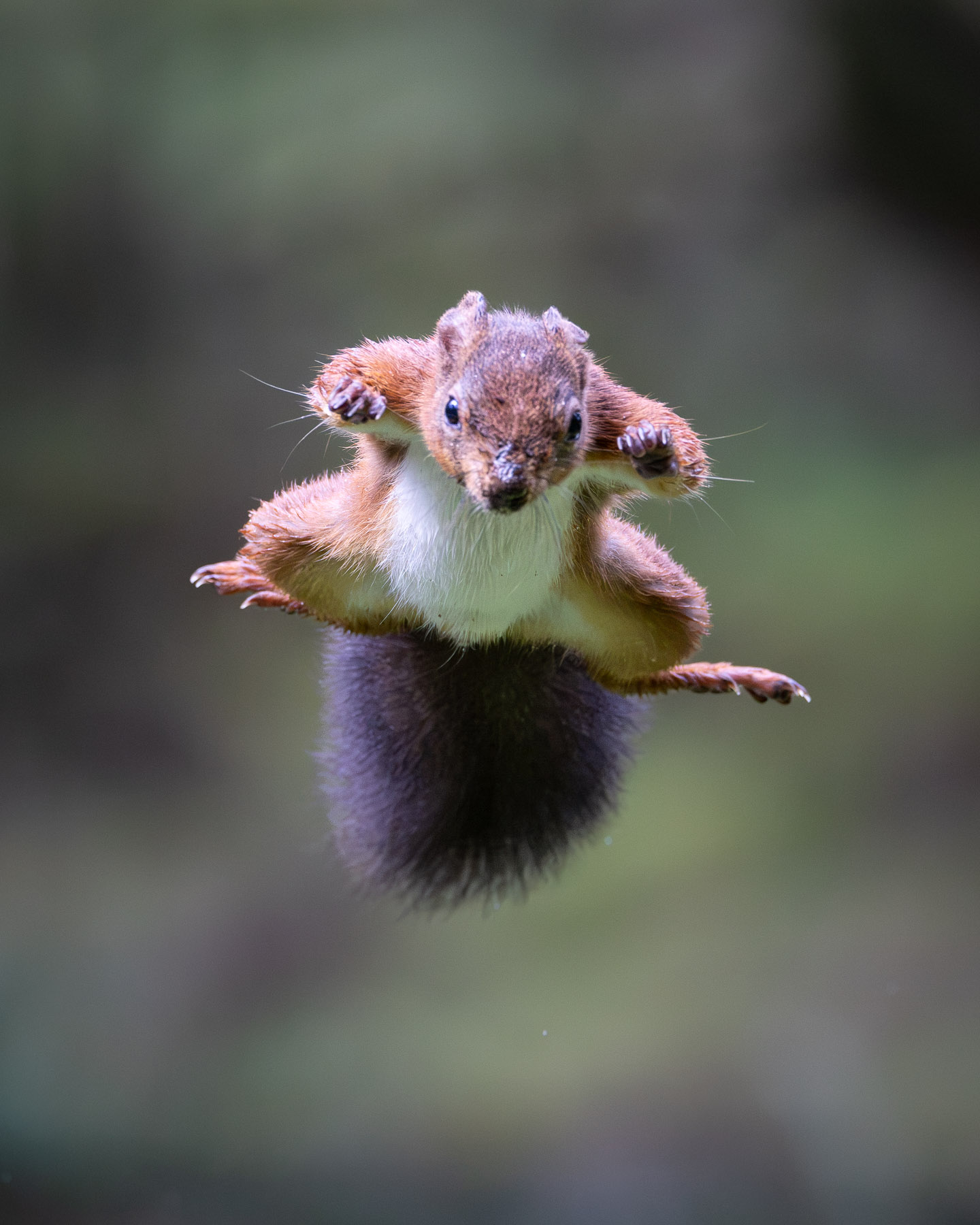
Our first stop was the Jumping Platform, where Paul helped me with the initial setup. I was using my Canon R5 (Mark I) on a tripod with the RF 100-500mm lens. Paul recommended a shutter speed of 1/2000 sec, using the widest aperture available on my lens, with Auto ISO. He also showed me exactly where to focus, so the focus was set for the point where the squirrels would be mid-jump.
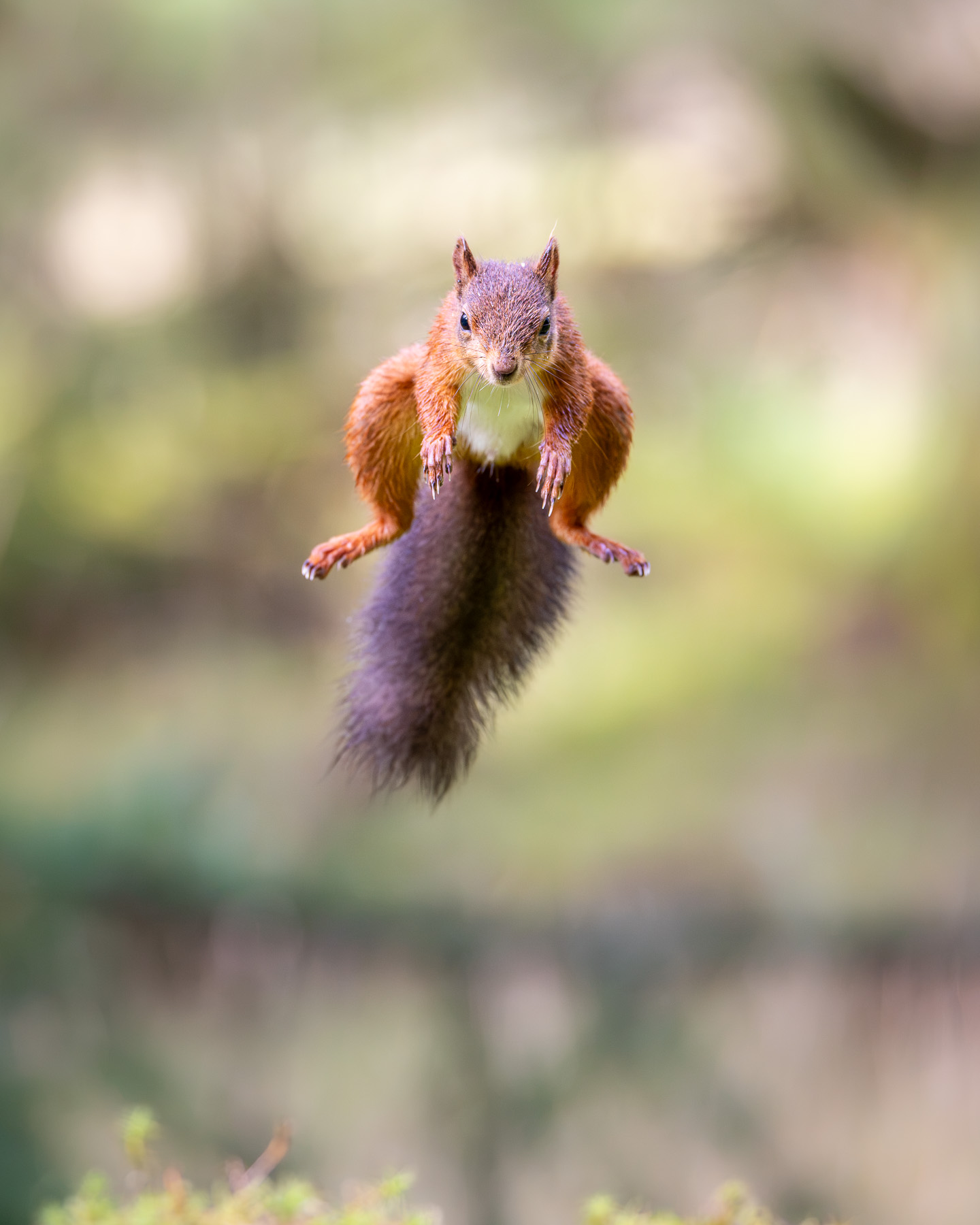
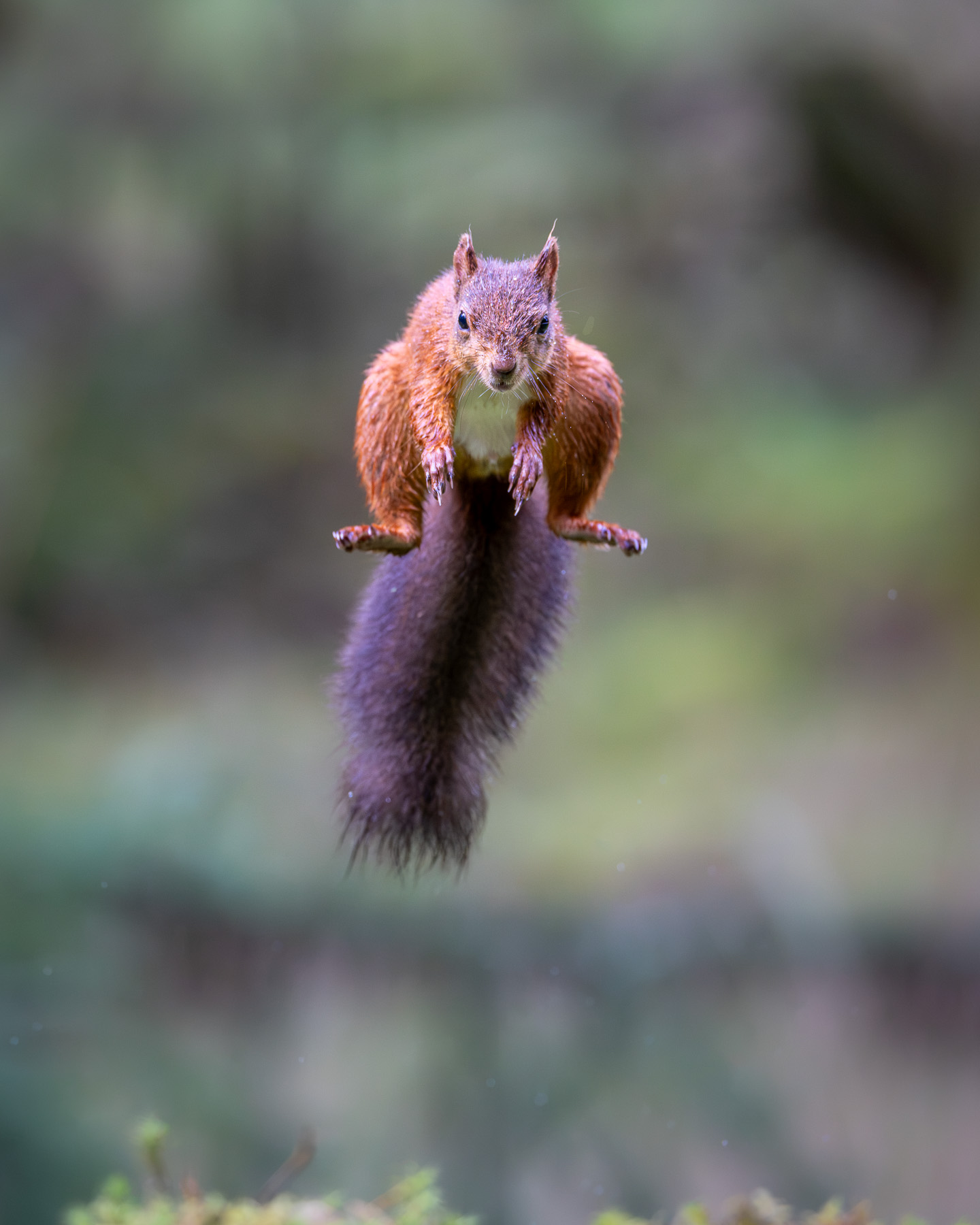
The squirrels would run up a plank onto one platform before launching themselves across to the next. The idea was to capture them in mid-air as they made the jump.
The best method here was to hold my finger on the shutter and use a high-speed burst, starting as soon as I saw a squirrel preparing to take off. With such a shallow depth of field, the squirrel would be out of focus as it began its jump, move into focus as it reached the point I had focused on, and then move out of focus again as it continued on to the next platform. Using a burst gave me the best chance of capturing a sharp image at exactly the right moment.
Of course, the squirrels didn’t always follow the plan!
A couple of them worked out that they could skip the jump altogether and take a more direct route to the platform where the nuts were waiting. Paul was having none of it!
In the video you can hear Paul trying to convince them that this wasn’t how it was supposed to work!
Once they were behaving themselves, it was simply a matter of watching, anticipating the jump and being ready to press the shutter at exactly the right moment. The squirrels were incredibly quick, so timing was everything.
The Dry Stone Wall
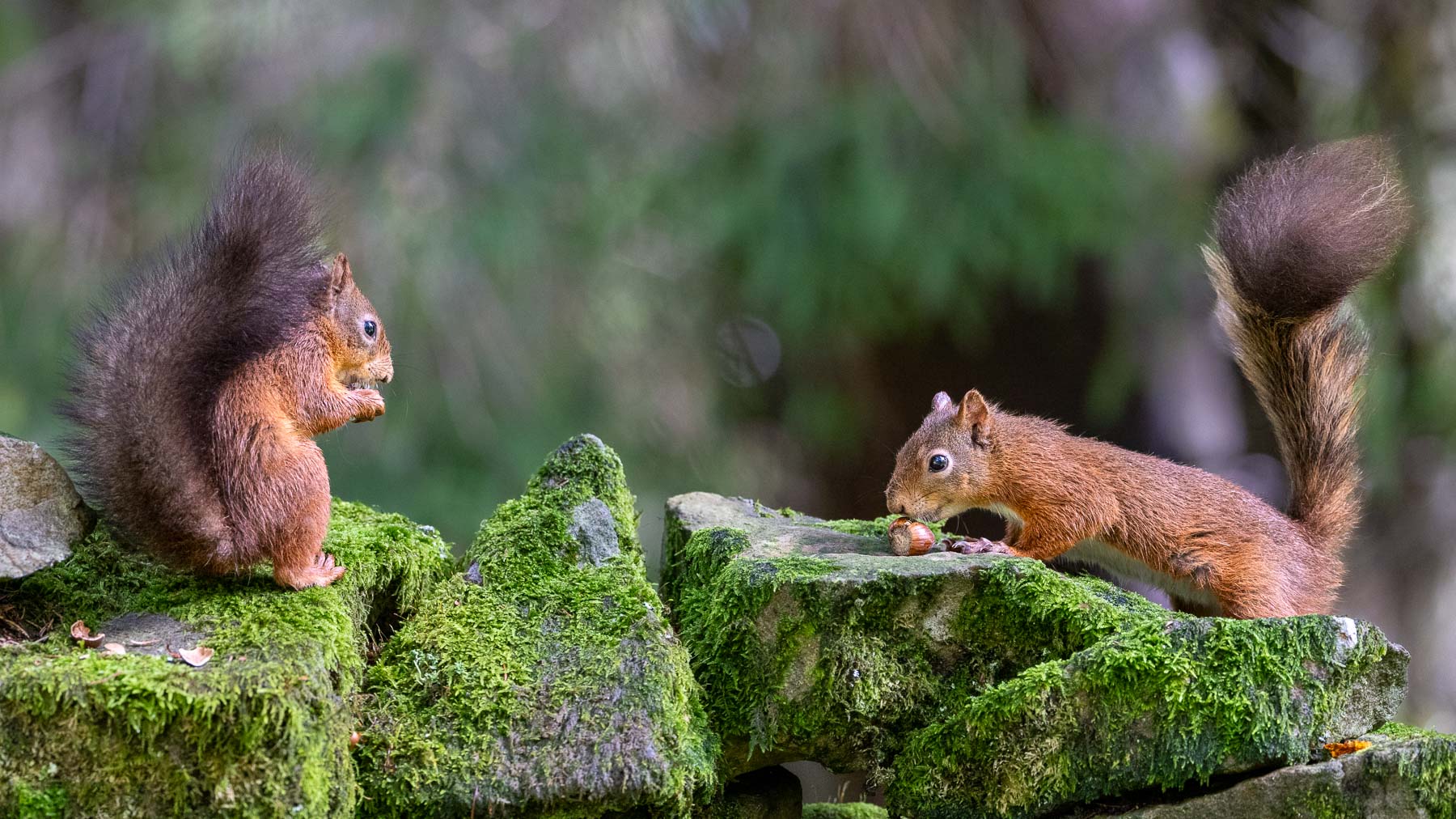
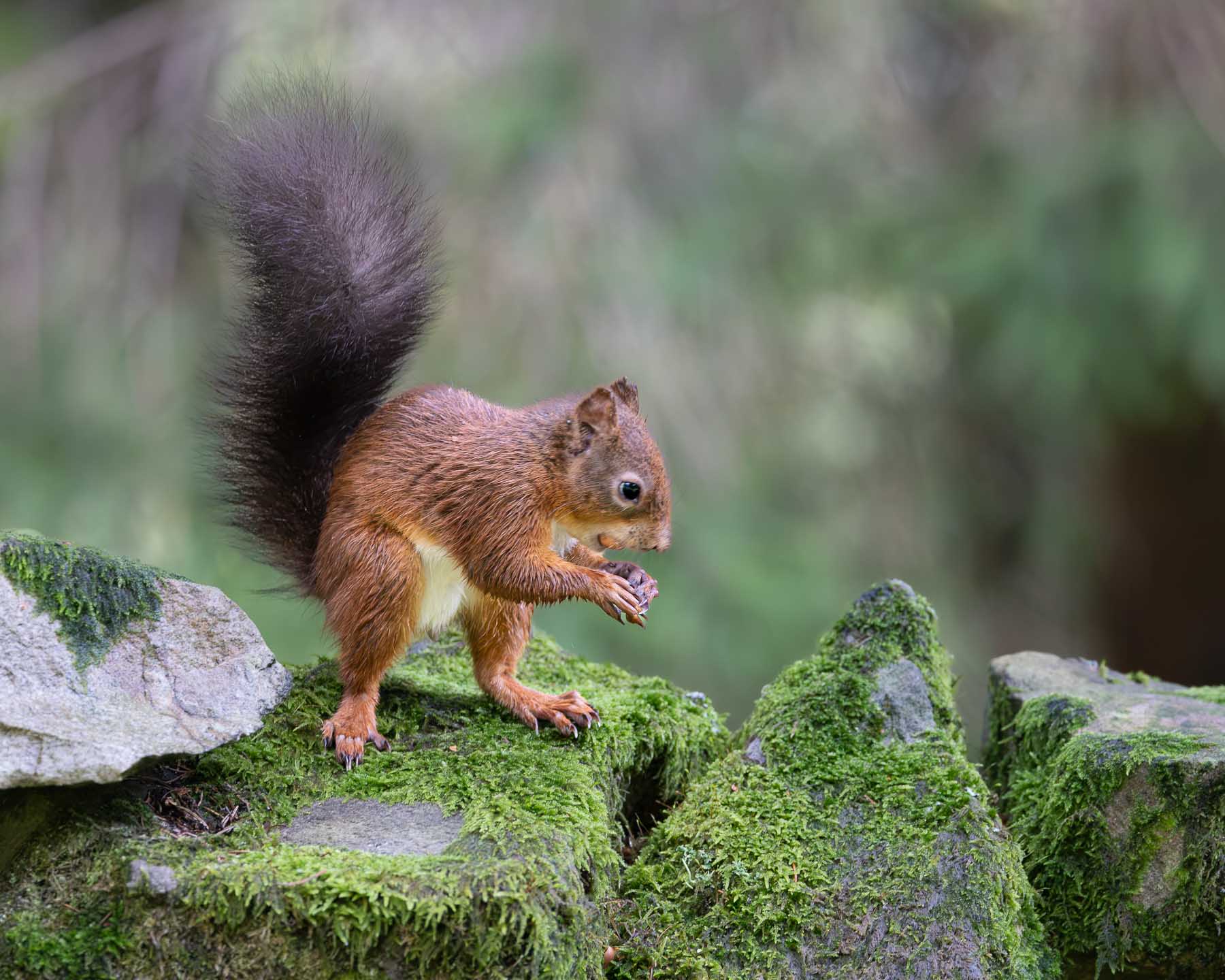
After the jumping platform, we moved on to the dry stone wall, which offered a completely different opportunity for photographing the squirrels.
Here, the squirrels would move along and around the wall, giving me the chance to capture them against the texture and character of the Yorkshire Dales stonework. Rather than photographing them in mid-air, I could concentrate more on their movement, poses and expressions.
Hubby (a.k.a. Assistant Photographer, Sherpa & Bodyguard) was put to work filming from the side while I positioned myself in front of the wall, camera at the ready.
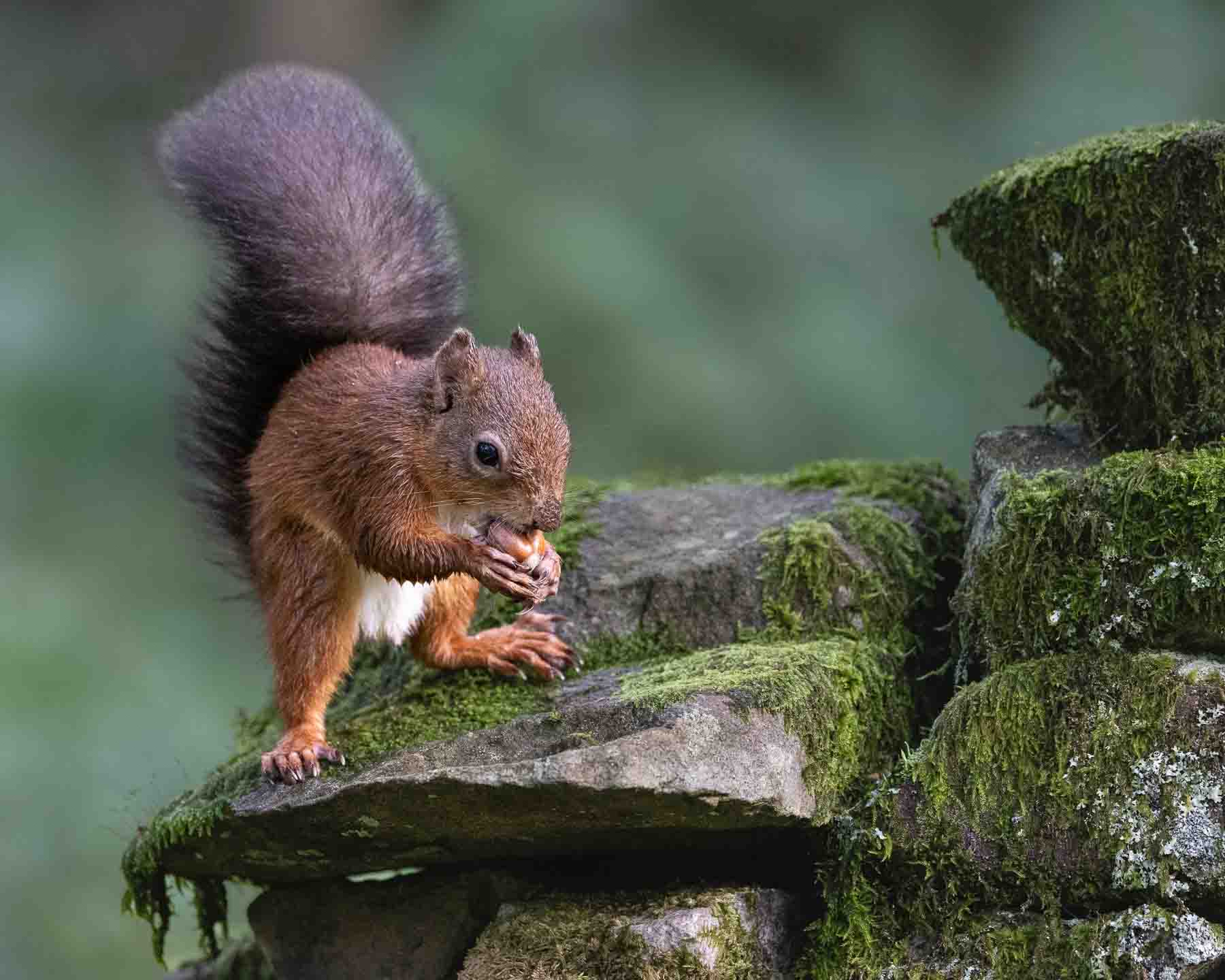
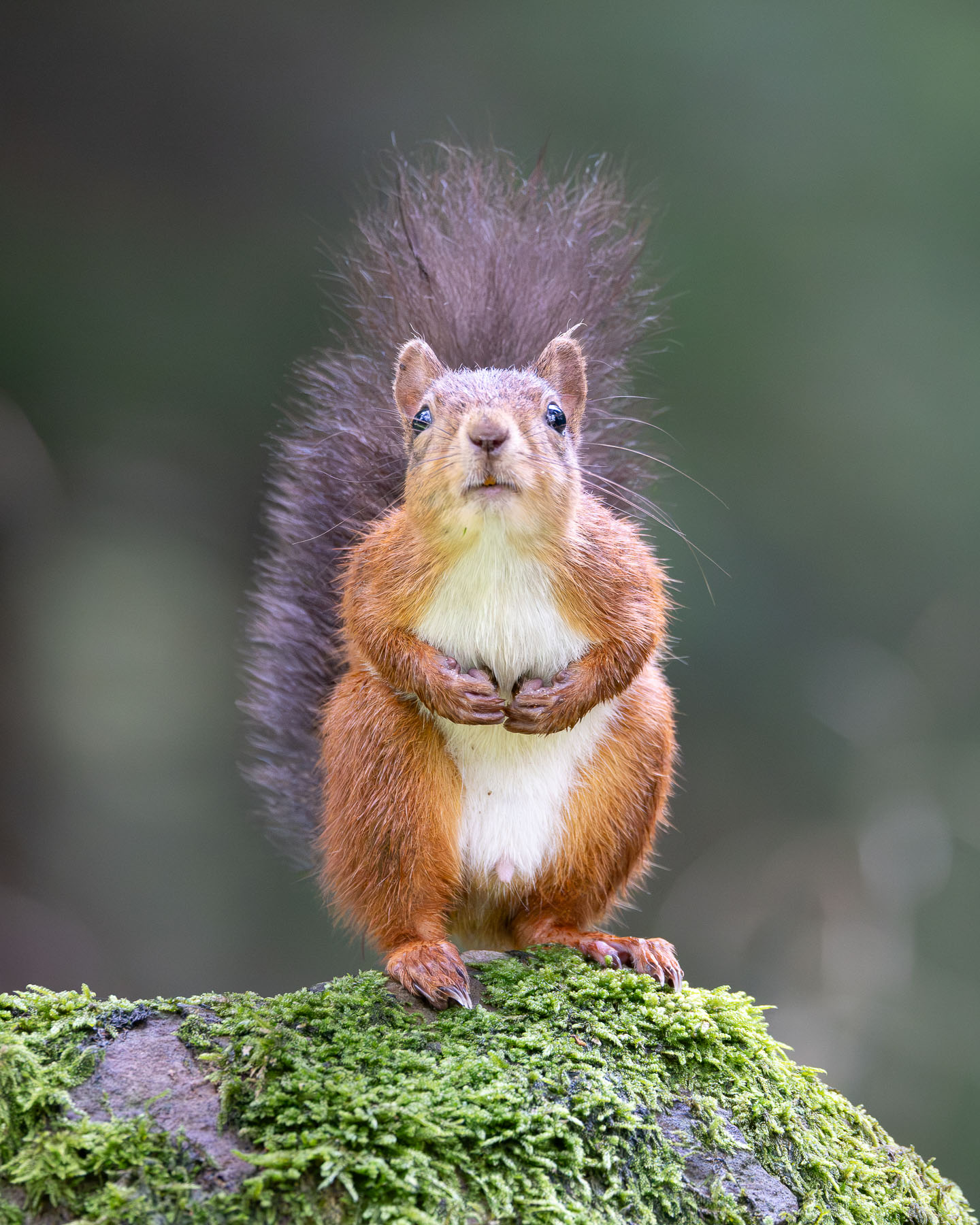
Please Sir, can I have some more?
The Woodland Hide
The Woodland Hide has four windows — three across the front and one on the side — giving me different angles for photographing the wildlife.
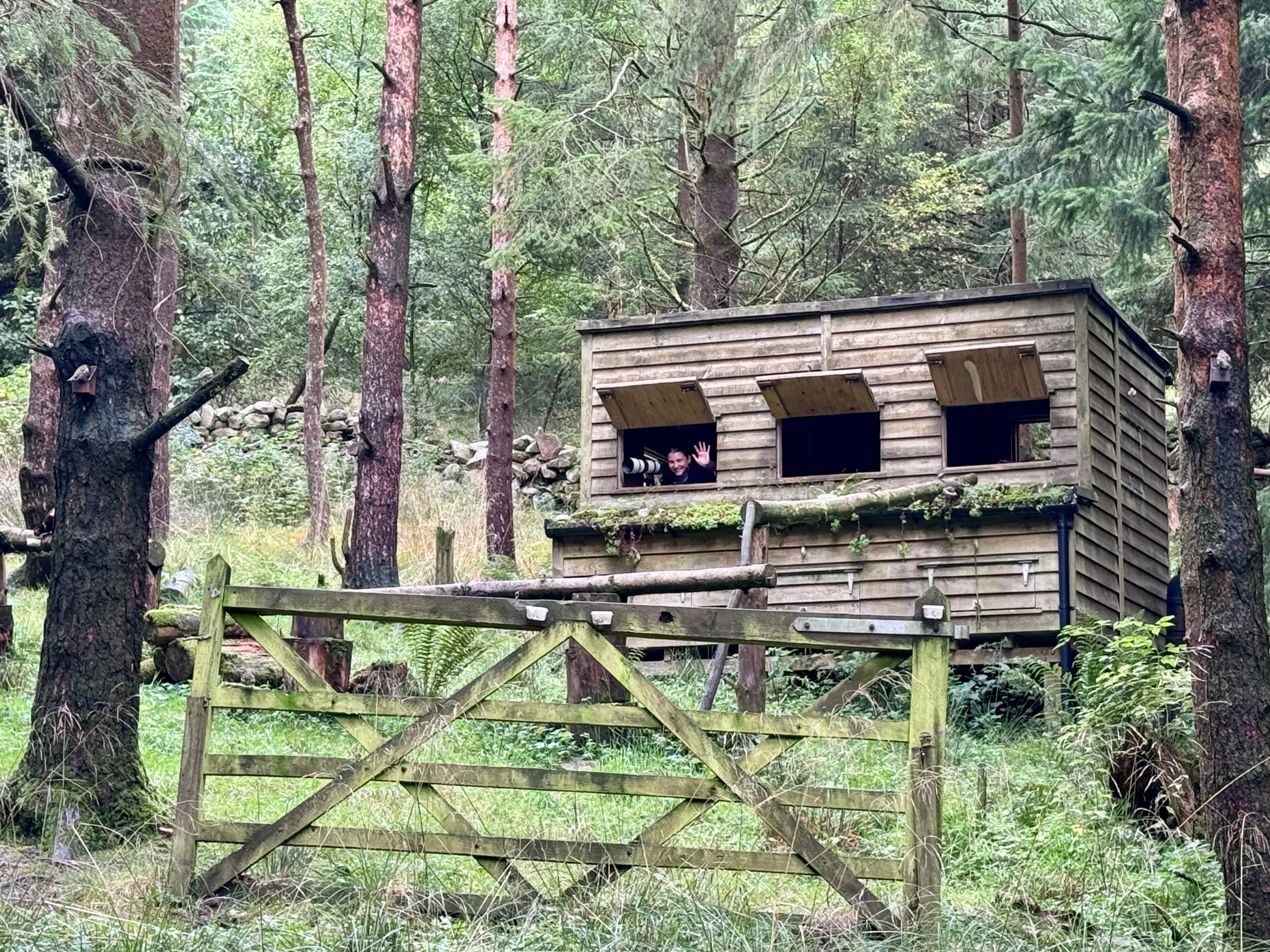
This photograph gives a good idea of the setup from the outside and shows the different windows I could move between as the squirrels and birds appeared in different locations.
From here, the squirrels could be photographed in a variety of settings, including tree branches, tree stumps and fallen logs. There were also some more unusual perches, including fencing and even signposts, which added some variety to the photographs.
The hide wasn’t just about squirrels, either. There was a surprising variety of birdlife visiting the area, including European Robins, Coal Tits, Eurasian Nuthatches, Great Spotted Woodpeckers and Ring-necked Pheasants.
There was always plenty of activity going on, and it was often hard to decide which window to stand at. Just when I was concentrating on something happening outside one window, there could be something else happening somewhere else.
To make matters worse, there was often a pattering of feet behind me. The squirrels would run into the shed, investigate to see if there were any nuts to be found, and then dash back out again. With squirrels appearing in every direction, there was certainly no shortage of subjects — just the challenge of deciding which one to photograph!

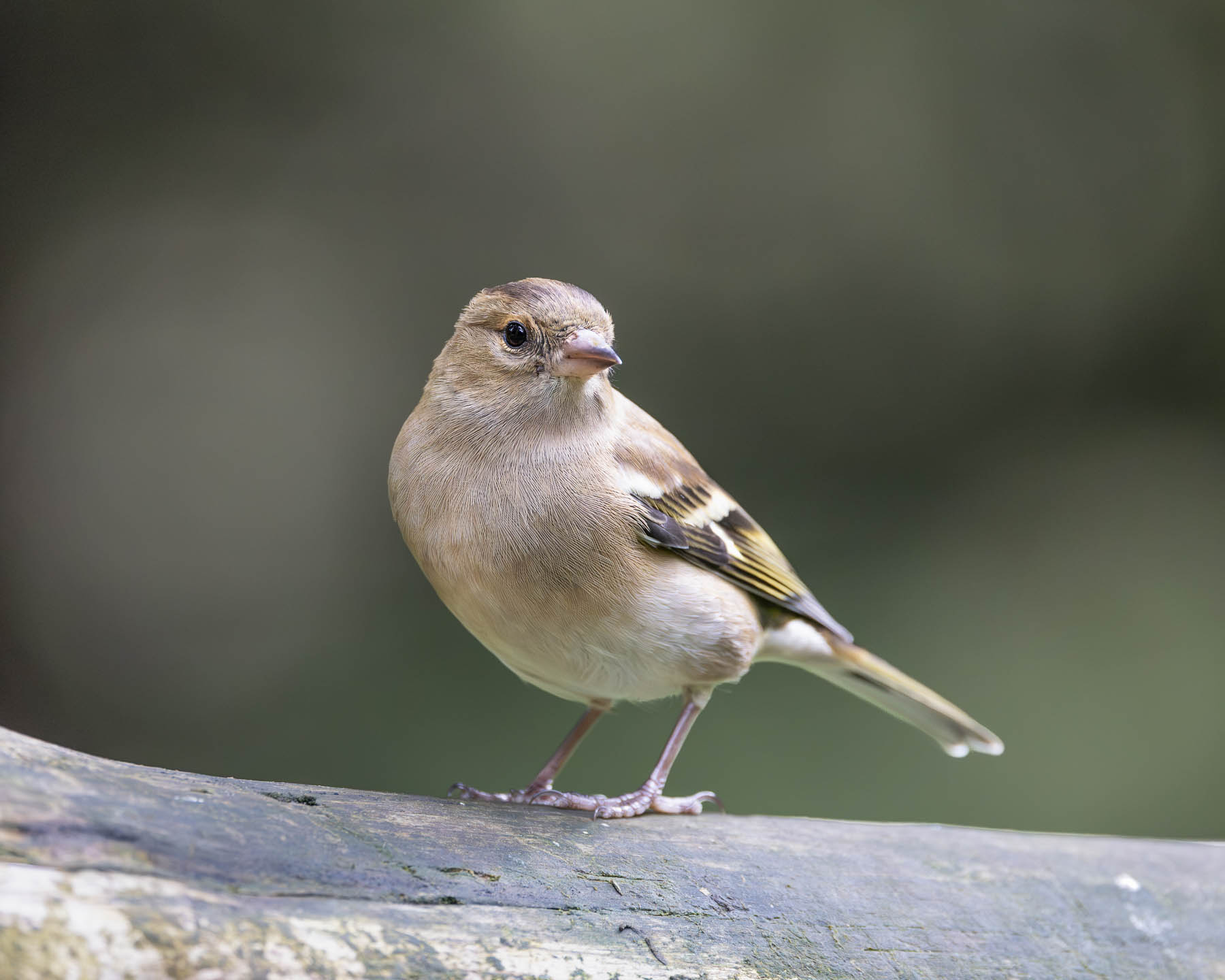
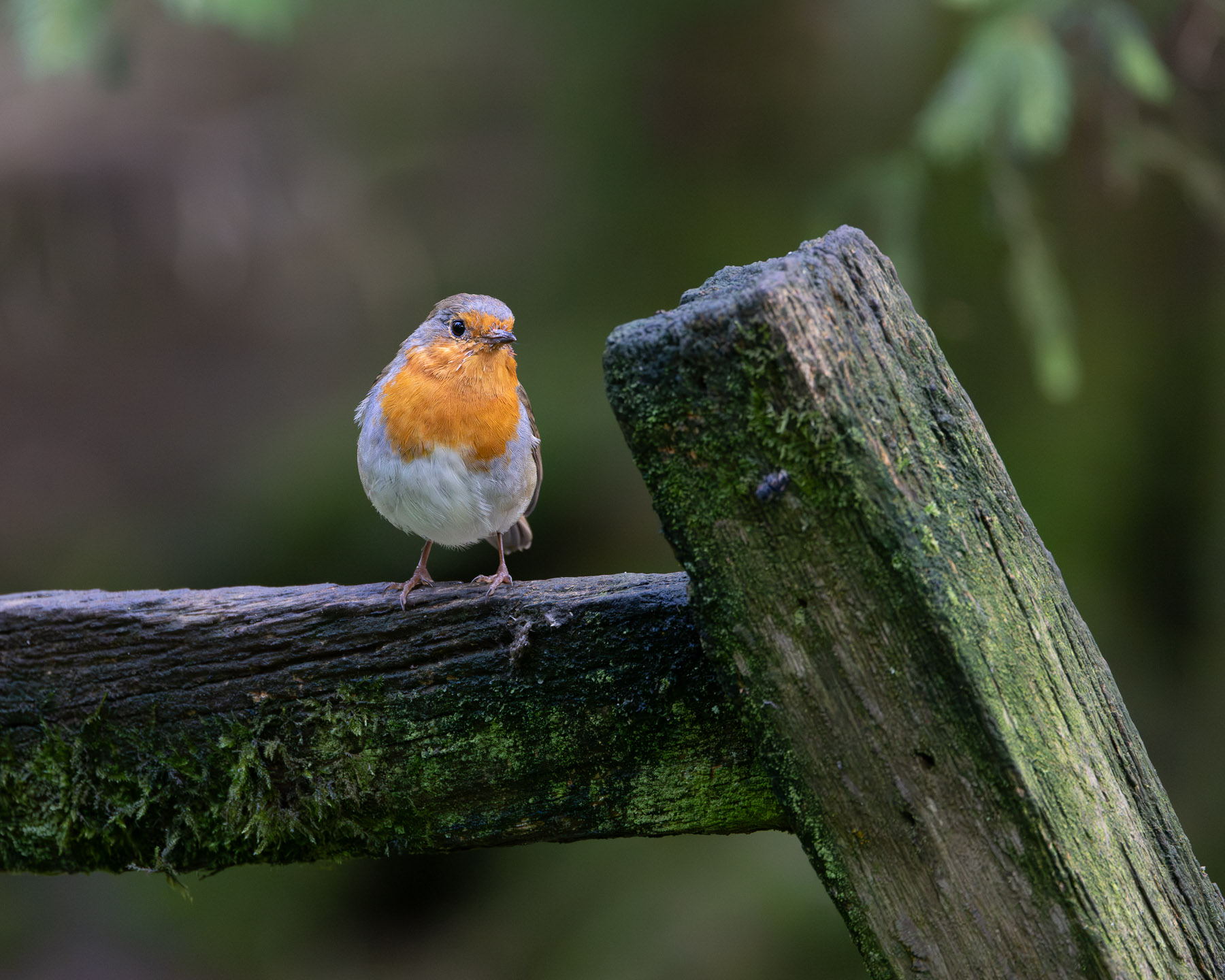
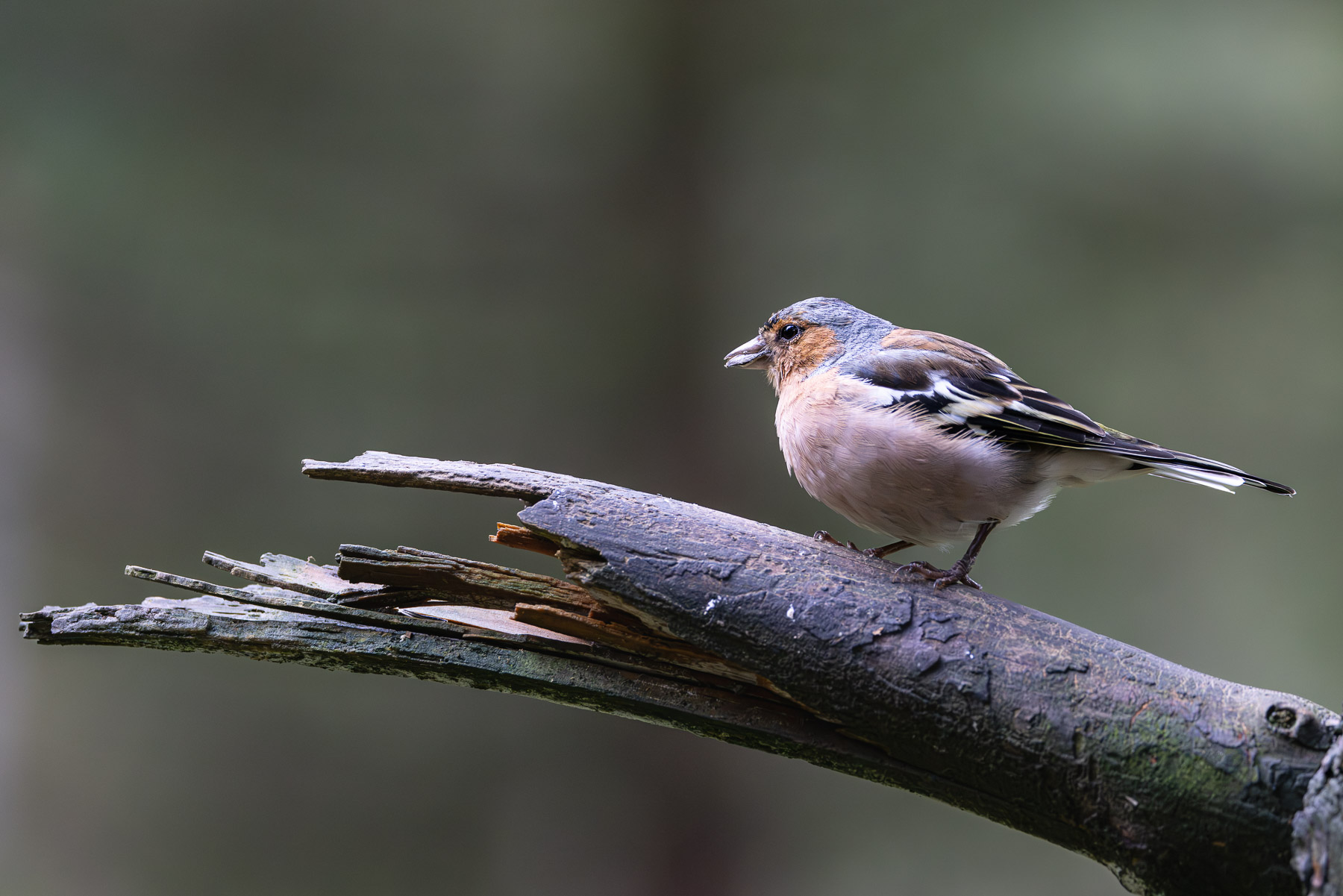
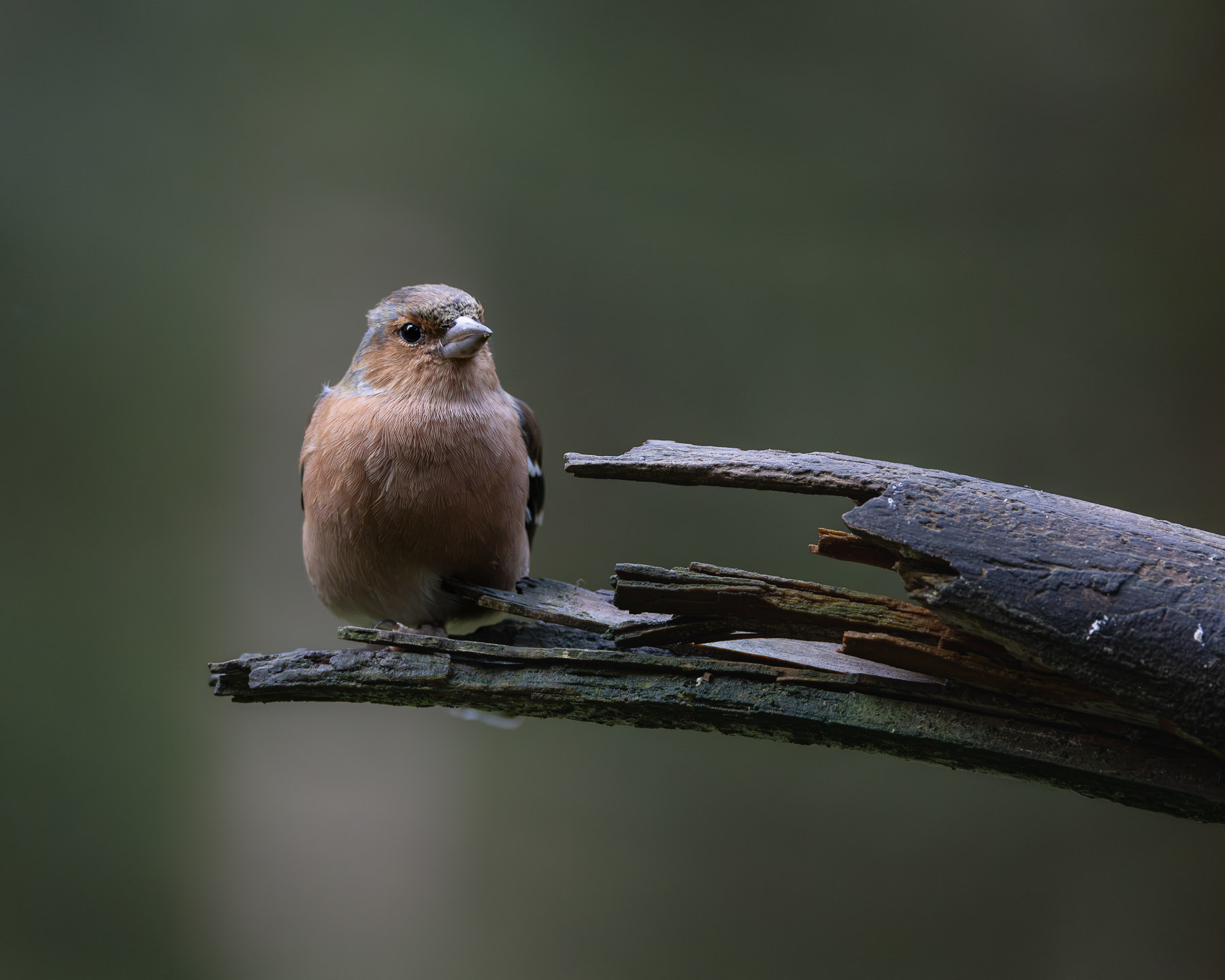
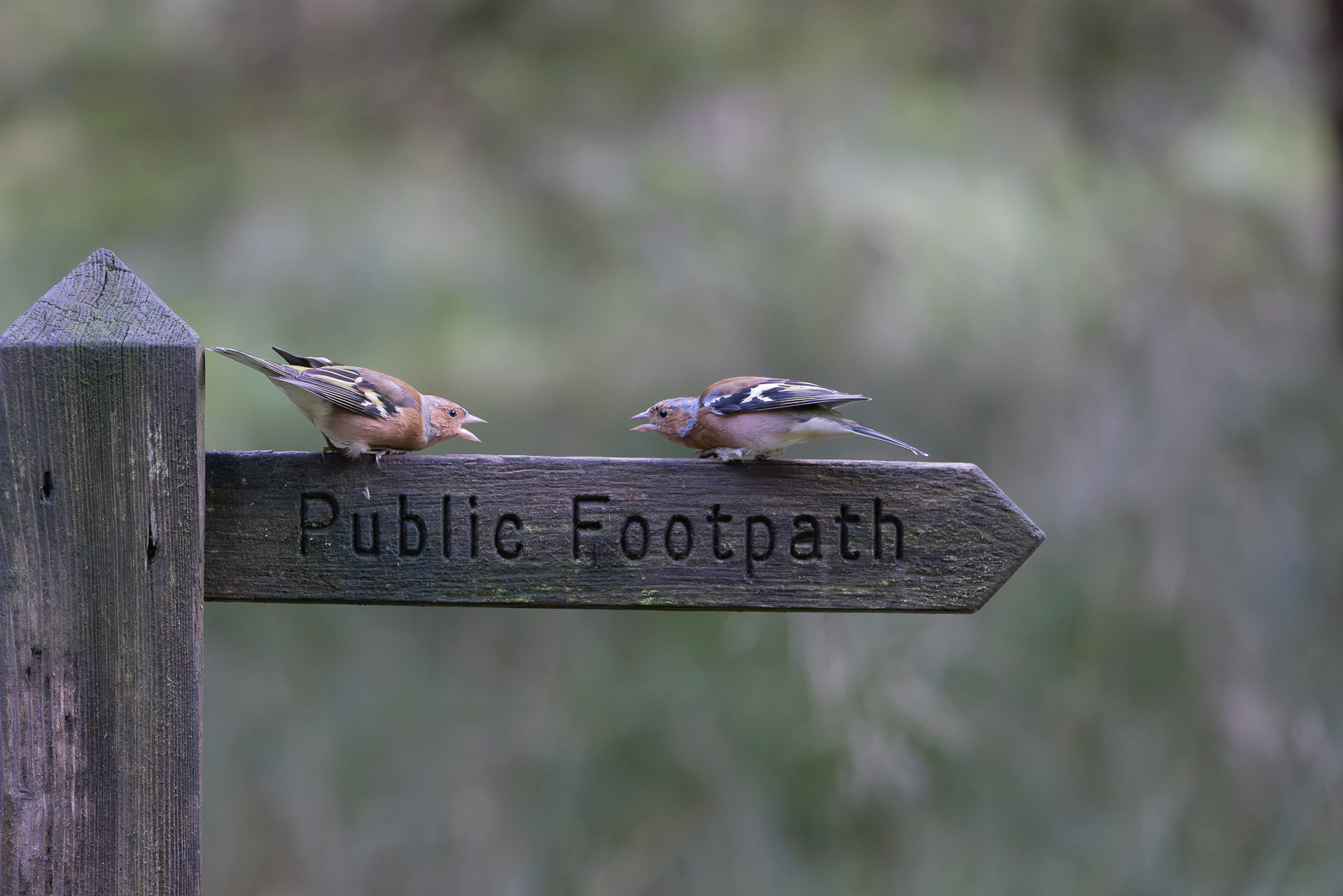
The photography was becoming more complex as we moved through the different areas. At the Jumping Platform, although catching the squirrel in mid-air was challenging, the camera was on a tripod with the focus preset for the point where the squirrel would jump. At the Dry Stone Wall, I was shooting handheld, but the squirrels were moving sideways along roughly the same plane of focus, which made it easier to keep them sharp.
The Woodland Hide was a different challenge altogether. The squirrels — and the birds — were moving between branches, tree stumps, logs and other locations, so I needed to continually refocus as they moved. I found this particularly challenging because I was finding the autofocus on my RF 100-500mm lens a little slow, especially when the subject moved out of the focus area and the camera had to reacquire it.
The Reflection Pool
The Reflection Pool was my favourite of the four areas. At the end of the hide was a shallow rectangular pool, with the short end running along the front of the hide at bench height. This meant I could sit in the hide, rest my arms on the bench and photograph down the length of the pool, making the most of the reflections.
Paul’s wife, who is a landscape gardener, had created an amazing fairytale woodland scene around the pool, with moss, ferns, mushrooms and logs creating a beautiful natural setting.
It was still very much action photography, though. The squirrels would move down the length of the pond, across the shorter end and then back down the other side, jumping over logs and mushrooms as they searched for nuts. They would reach into the water or underneath objects to retrieve the food hidden there, and would also race across the shallow water before leaping out the other side.
There was also a little ledge running alongside the pond, right up against the hide. The braver squirrels would run along it right in front of my lens, coming so close that I could have reached out and touched them. Trying to photograph a squirrel as it raced past just inches from the camera was another challenge altogether!
And then we had one particularly cheeky squirrel who decided there was an easier way to get to the food. It climbed into the front of the hide, reached into the nut box and helped itself!
[Insert video of the cheeky squirrel stealing a nut]
John’s photographs give a completely different perspective of the setup and show how the hide, pond and surrounding woodland were arranged. Seeing the whole scene also makes it easier to appreciate how much thought had gone into creating this little fairytale setting.
[Insert John’s photographs showing the hide and reflection pool from the outside]
The combination of the reflections, beautiful woodland setting and fast-moving squirrels gave me plenty of opportunities to try different compositions and capture some fun action shots.
Red Squirrel Conservation
Red squirrels face a number of threats in Britain, including competition from introduced grey squirrels and the spread of squirrelpox, which can have a devastating impact on red squirrel populations.
Paul is also helping to support red squirrel conservation through his photography. He has produced a beautiful book, A Year With Nature, featuring his wildlife photography throughout the seasons.
The book can be purchased from Paul’s website, and the proceeds go towards red squirrel conservation.
Looking Back on the Day
By the end of the day, I had taken far more photographs than I could possibly use — but that’s part of the fun!
Each of the four areas offered something completely different. The Jumping Platform was all about timing and anticipating the moment, the Dry Stone Wall gave me a different perspective on the squirrels’ movement, the Woodland Hide kept me constantly on my toes as squirrels and birds appeared in different places, and the Reflection Pool provided a beautiful setting for both action shots and reflections.
I really enjoyed the variety. It wasn’t simply a case of sitting in a hide and waiting for a squirrel to appear — each setup required a different approach, and I was constantly thinking about camera settings, focus, positioning and timing.
I’d wanted to photograph red squirrels properly for several years, so having a whole day dedicated to them was something I’d been looking forward to for a very long time. And getting the chance to hand-feed one of the young squirrels was an unexpected highlight that made the day even more memorable.
It was a fantastic day of wildlife photography, and definitely one of the highlights of our UK holiday. 🐿️📷
[Add favourite photographs from the day]

0 Comments